Canal Locks

(Side Cut Metropark, Maumee, OH)

I don’t remember exactly how they worked.

My son climbs stairs to a steel bridge over the highest of concrete-walled chambers. Careful! I shout up.

My mother takes photos on her phone, fumbling with its buttons. Even with new knees, she can’t do many stairs.

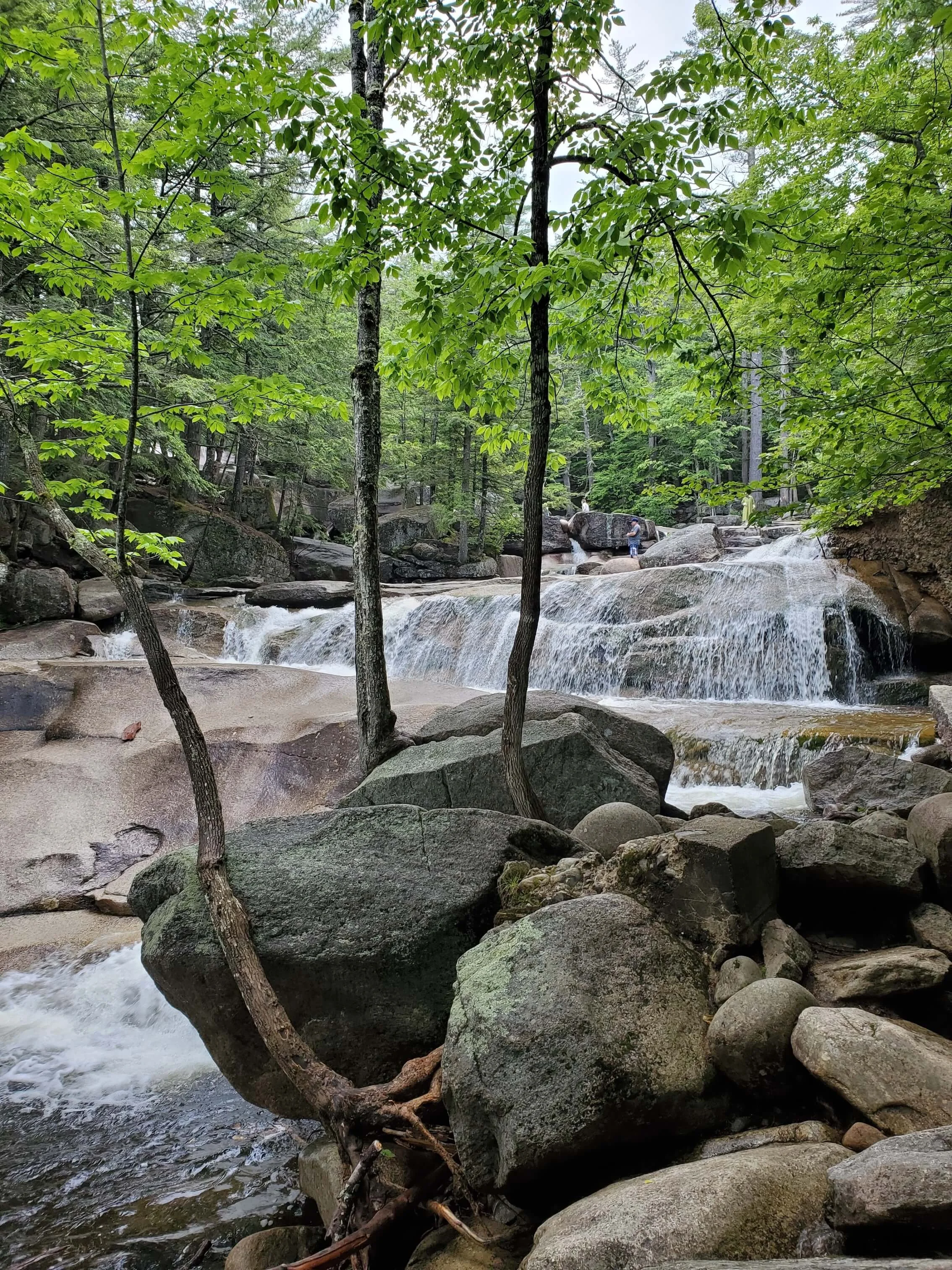
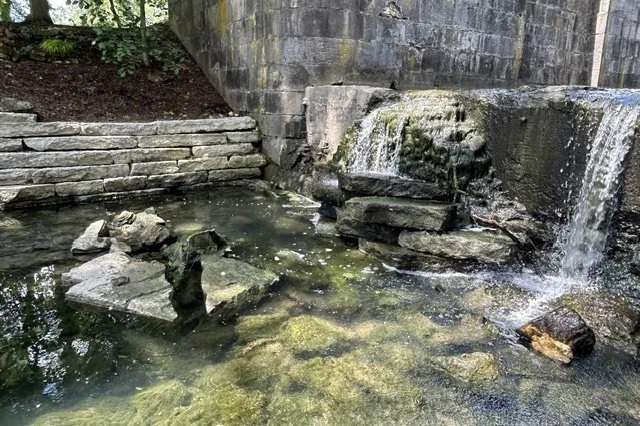
My daughter finds frogs in the stream’s mossy rocks and layers of trickling waterfalls.

It’s something about floating. The chamber would have had huge wooden gates, would have been filled with water, and a ship would have floated level with the next chamber.

My son throws a stick off the bridge, watches it dive over the waterfall edge, runs down the stairs

to follow the stick over the next drippy falls.

Something about ships between the Maumee River and the long-gone Miami and Erie Canal.

My daughter walks along the lock walls, down down, gouged into steadily-inclined land.

Mom says wait, look at me, and my daughter pauses, makes a smile for the camera. Wait, it didn’t go, Mom says, knocking her screen with her thumb. She might as well be a dragonfly, hovering without touching.  

My daughter gives up, walks on down. 

My son’s stick gets stuck between rocks.

A great blue heron pumps its wings overhead toward the river.

Mom is ten feet away saying shoot shoot, shaking her phone which didn’t flash when she wanted.  

The locks only operated for eight years. The floaters had no control of ships, once they’d shuttled them to the next level of flowing water.

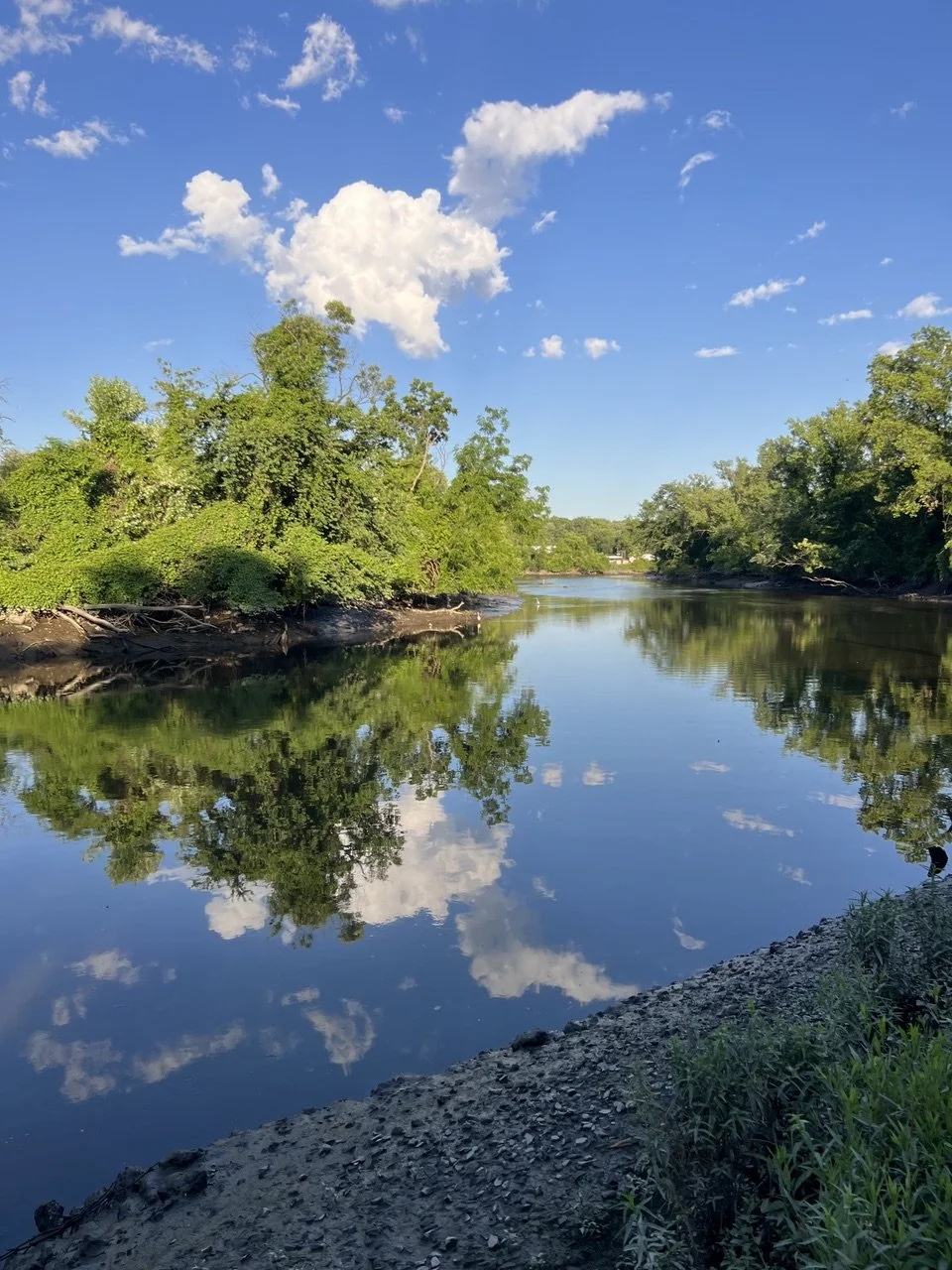
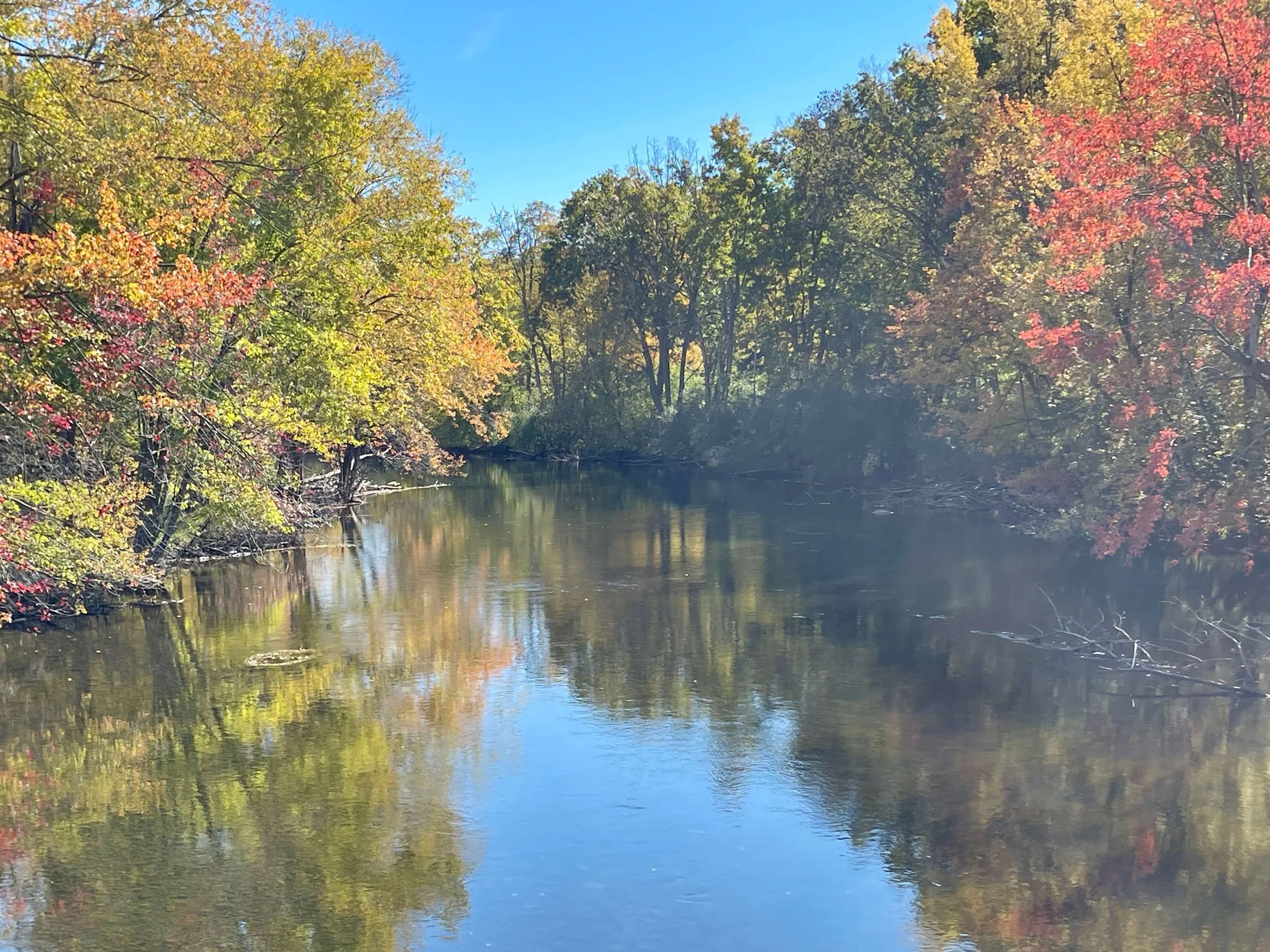
Downstream the slowed water is glassy. We watch water-striders wink ripples into the surface. My daughter spots fat tadpoles—look, Grandma, it’s growing legs! Mom mumbles um hum.

The locks have no connection to the river anymore—the river too shallow now for ships.

Someday Mom will ask for my help emailing the photos to myself. Once she has them in her phone she doesn’t know how to get at them.
Kerry Trautman is a lifelong Ohioan whose work has appeared previously in Parks & Points, as well as in various anthologies and journals. Her books are Things That Come in Boxes (King Craft Press 2012,) To Have Hoped (Finishing Line Press 2015,) Artifacts (NightBallet Press 2017,) To be Nonchalantly Alive (Kelsay Books 2020,) Marilyn: Self-Portrait, Oil on Canvas (Gutter Snob Books 2022,) Unknowable Things (Roadside Press 2022,) Irregulars (Stanchion Books 2023,) and Things to Say When You Have Nothing to Say (Roadside Press 2026,) and Days of Bees (Dancing Girl Press, 2026.)

Banner image is courtesy the poet.
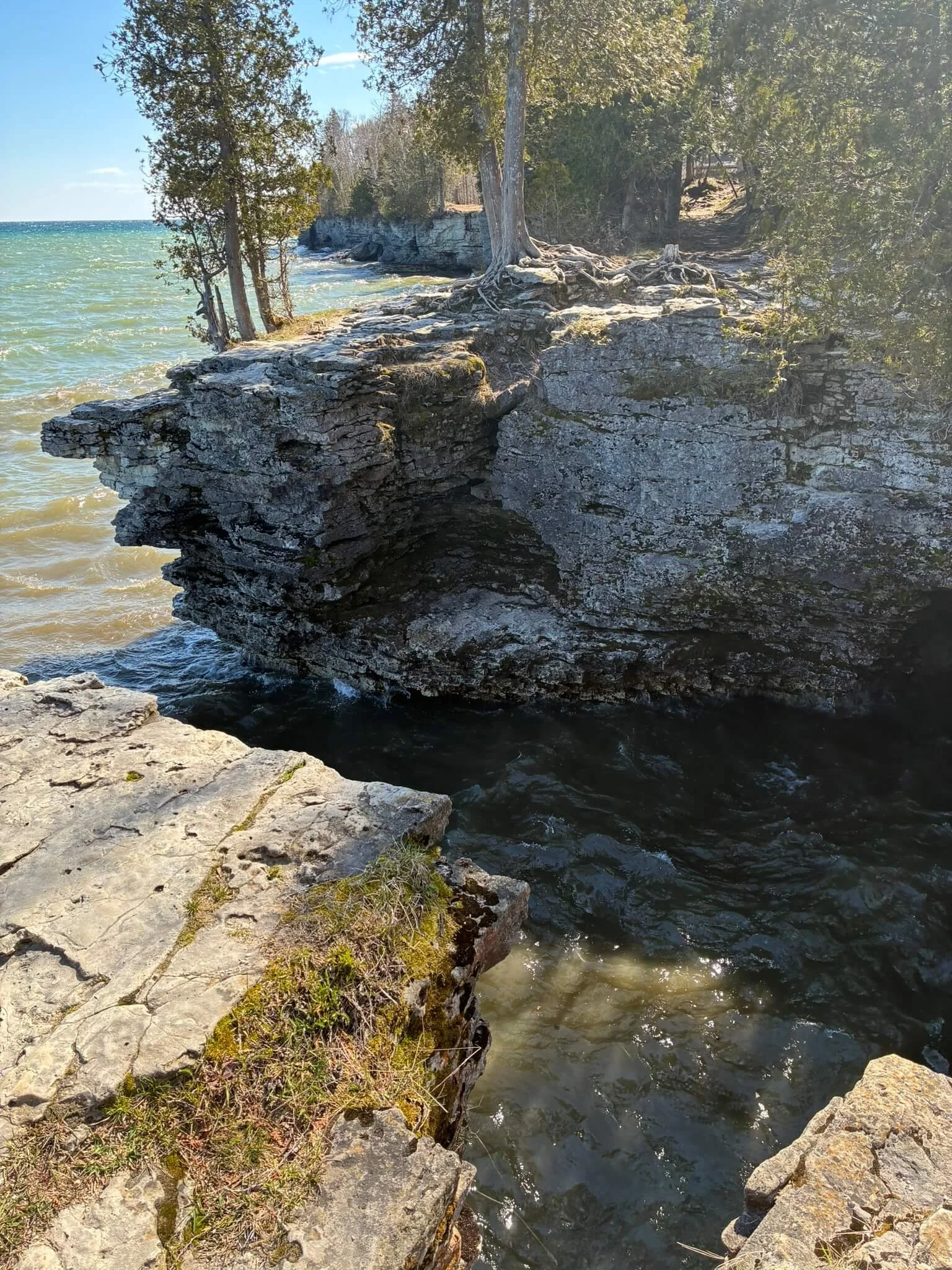
Cave Point

Cave Point County Park, within the state park of Whitefish Dunes in the Door County peninsula of Wisconsin.

Slipping away from a conference, I wind
toward the jaggy edge in the joint of Door County’s cocked finger.
Coastline wind cuts through my jacket, slaps me,
the white cedars, and the bright feathers of the balsam firs about.
A few columbines remain, wave-worn flags
shaking their tatter, faded in the clear sky and sun.
Finally, I look down along the ledges of dolomite and limestone,
underwater caves, blowholes, the collect and freeze of water
abrading this brittle chalky scab that was once equatorial,
a reef before language named it reef,
now snaggled on the western edge of the Niagara escarpment.
Lake Michigan beats against the Devil’s Cauldron,
a ledge wide like the horseshoe farriered by St. Dunstan,
a pile of bonewhite stones in its bottom jaw.
I came here to write, but the cold holds me in the moment,
nine-hundred feet of shoreline down to the exposed, smoothed rock,
the gusty shimmy of trees between the trail and cliffs,
the lake’s muddy jade darkening at the horizon.

Seth Copeland is the author of Instead of Sunshine (Bottlecap Press, 2026) and his work has appeared in Poet Lore, Seneca Review, Puerto del Sol, The Shore, and South Dakota Review, among others. He edits petrichor, teaches at the University of Wisconsin-Whitewater, and co-hosts the Tabi Po Poetry Series in Milwaukee. 

Banner image is courtesy the poet.
Hiking Too Far to Upper Lena Lake with My Daughter

She is fifteen,
and I cannot hold this quiet
inside me
no matter how much
we need it.
I cannot even hold it
until the switchbacks end
and we emerge after
hiking 14 miles. 

We sit on a log.
No one else is here.
We are present with this lake
and each other
deep in the woods,
high above our lives. 

Dragonflies dip and buzz
near half-drowned logs.
Bugs create tiny kerplunks
on the water, only slightly ruffled
by a chill breeze.
We breathe slowly and close our eyes. 

This may be the last hike of the year.
Our legs burn from the climb up.
We do not know yet
that I have taken us too far.
The way back will be long
and we will fight, yelling into the woods.
The switchbacks down will seem endless
and the dark will creep in from the woods. 

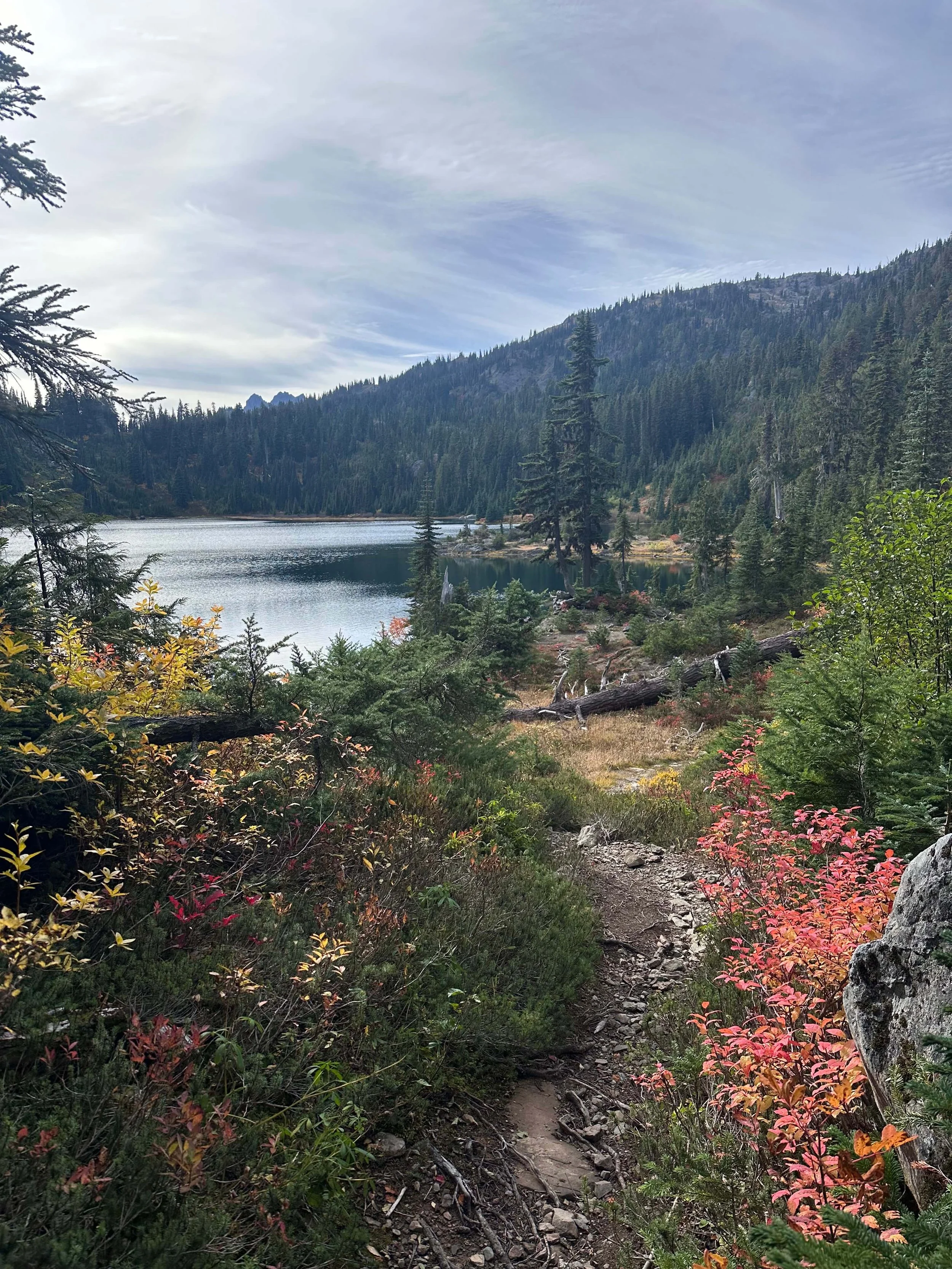
Across the water:
red and yellow leaves.
Near us, wild blueberries flame red.

Liona T. Burnham is a Pacific Northwest poet. Her poems are published or forthcoming in Elysium Review, The Comstock Review, Allium, Crab Orchard Review, and more. Her poems won the Northern Virginia Review’s Poetry Prize and were nominated for Best of the Net. She has a master’s degree in English and teaches at the community college level. She enjoys camping and hiking with her husband and three daughters

Banner image is courtesy the poet.
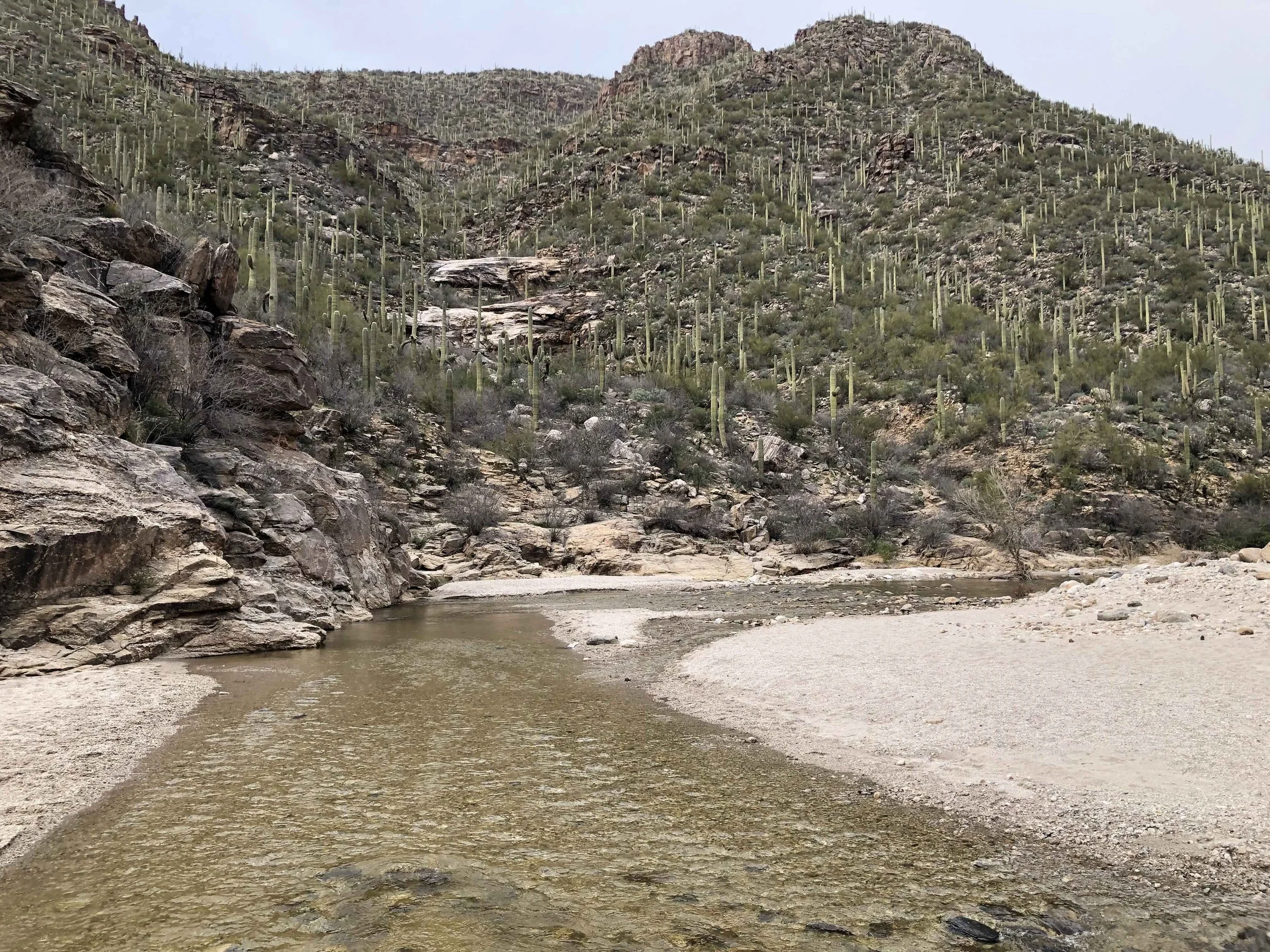
The Sonoran Desert

Until I learn that the freshwater jellyfish
found here, in this desert canyon, are impossible
to see, I keep my face to each waterway passage.
The transparent medusa are the size of a penny.
We wind across and back with the river
all the way down our path. No rattlesnakes,
no scorpions, but the silent cactus—startling
in their humanlike appearance—in multitudes.
I had heard the desert was brown, but I see
green everywhere. Palo Verde, saguaro, jumping cholla,
prickly pear, organ pipe—these hardscrabble lives
anchor into the dry desert soil. I’ve had to unlearn
hoarding sustenance. To become plump
with monsoon and no guarantee of the next rain.
My little life has less ups and downs—
a routine where I watch myself peel away
into an alternate woman who never gave anything up.
She keeps Bunnahabhain on a low shelf
and a pack of cigarettes in her tote. She rides
the subway alone while I calm my fitful child.
She is indifferent to the life she doesn’t know.
The saguaro are patient, and time moves slow.

Emily Hockaday is the author of Blood Music, In a Body, and Naming the Ghost. She has had work appear in a number of journals including Electric Literature, The Rumpus, and Terrain. Emily writes about ecology, chronic illness, parenthood, and the urban environment. You can find her at www.emilyhockaday.com or @emilyaltahockaday.

Banner image is courtesy the poet.
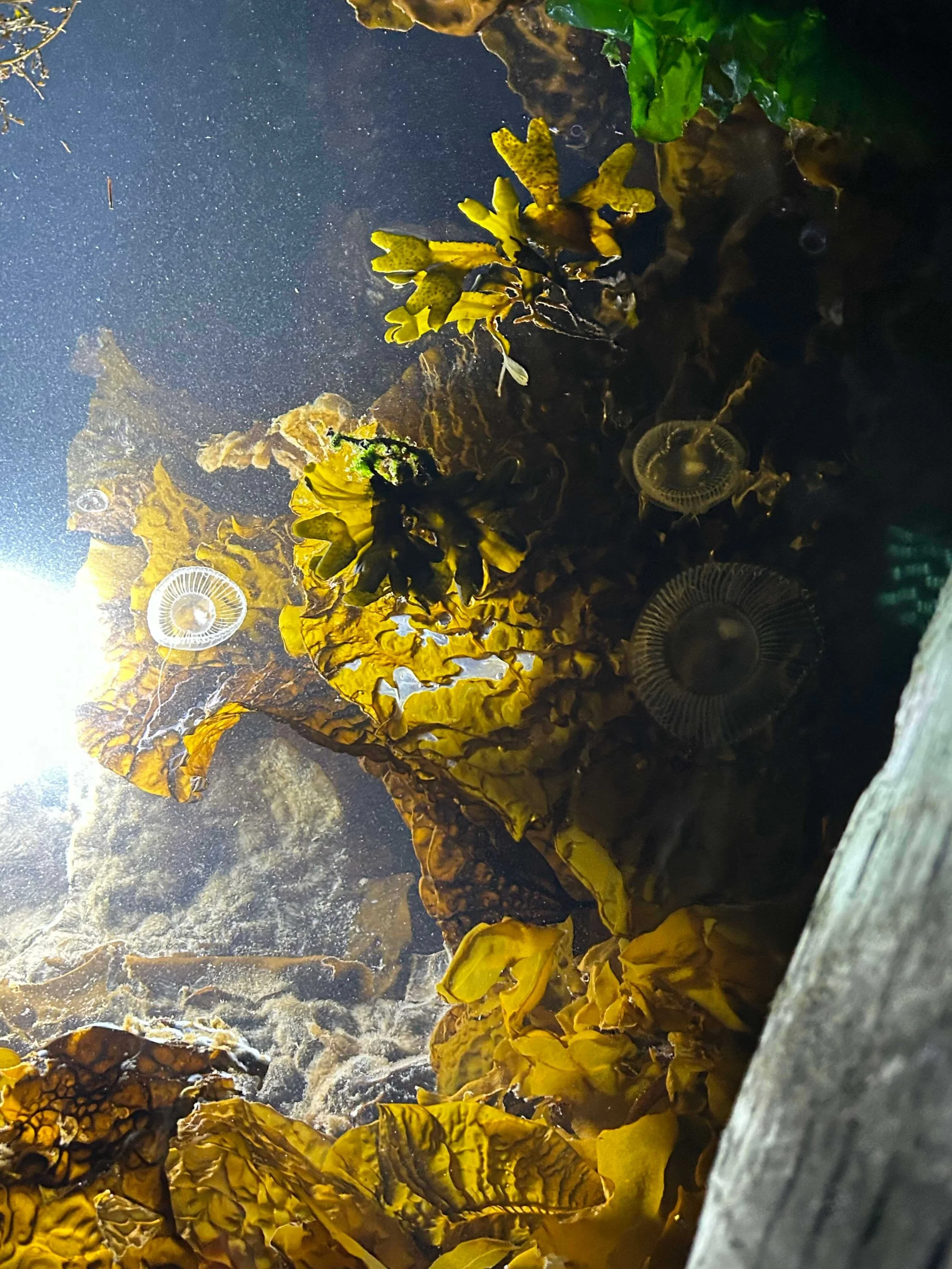
Docklighting

Forests of weed waved from down there
where glow could only penetrate so deep,
a sea of murk, blowing past our view.
We waited. Slow, slow the creatures came
and we caught them, gaggle of students chattering
at each undulating alien enclosed
and on display within clear plastic bowls.
Sarsia, a jelly little known, wiggling
mouthpart jerking lightly side to side,
unconcerned, its prison large enough
to mimic, for its small compass, the whole sea.
A Nereid worm writhed as it stared with blank
grasshopper face, paddles rippling
luridly painted in neon blues and reds,
an artist’s contemporary fever dream
out of deep past, accidental of prehistory
disclosed by our artless scooping. We hoped


for a seal, which I was told sometimes rise
to prospect among fish attracted by the light,
figure of power to reward our efforts.
We watched for that whiskered face, that wild strength.
“It’s startling when they come,” our trip leader said.
“Sometimes it’s almost scary.”
A gossamer worm was summarily captured;
the lacy egg-yolk skirts of a Phacellophora.
All night no seal rose to interrupt us,
and the light seemed to probe less far the longer we stayed.

I write most often about nature and the environment. My chapbook Water Street (FLP, 2017) won the New England Poetry Society Jean Pedrick Chapbook Prize, and my poetry has appeared in venues including Scientific American, Terrain.org, Cider Press Review, Connecticut River Review, and the forthcoming anthology Cape Cod to Nova Scotia: Art Ecology Poetry. The author of the middle grade eco-novel THE MONARCHS OF WINGHAVEN (Walker Books US, 2024), I have published science journalism in The Boston Globe, Seattle Times, Science News and other venues. I hold a doctorate in geology from the University of Michigan, have served as writer in residence at FHL, the Shoals Marine Laboratory in Maine, and the Forbes Library in Massachusetts, and have previously worked as a journalist, environmental consultant, and Seattle Aquarium docent. Born in England to emigrants from Brazil, I now teach at Smith College in western Massachusetts.

Banner image is courtesy the poet.
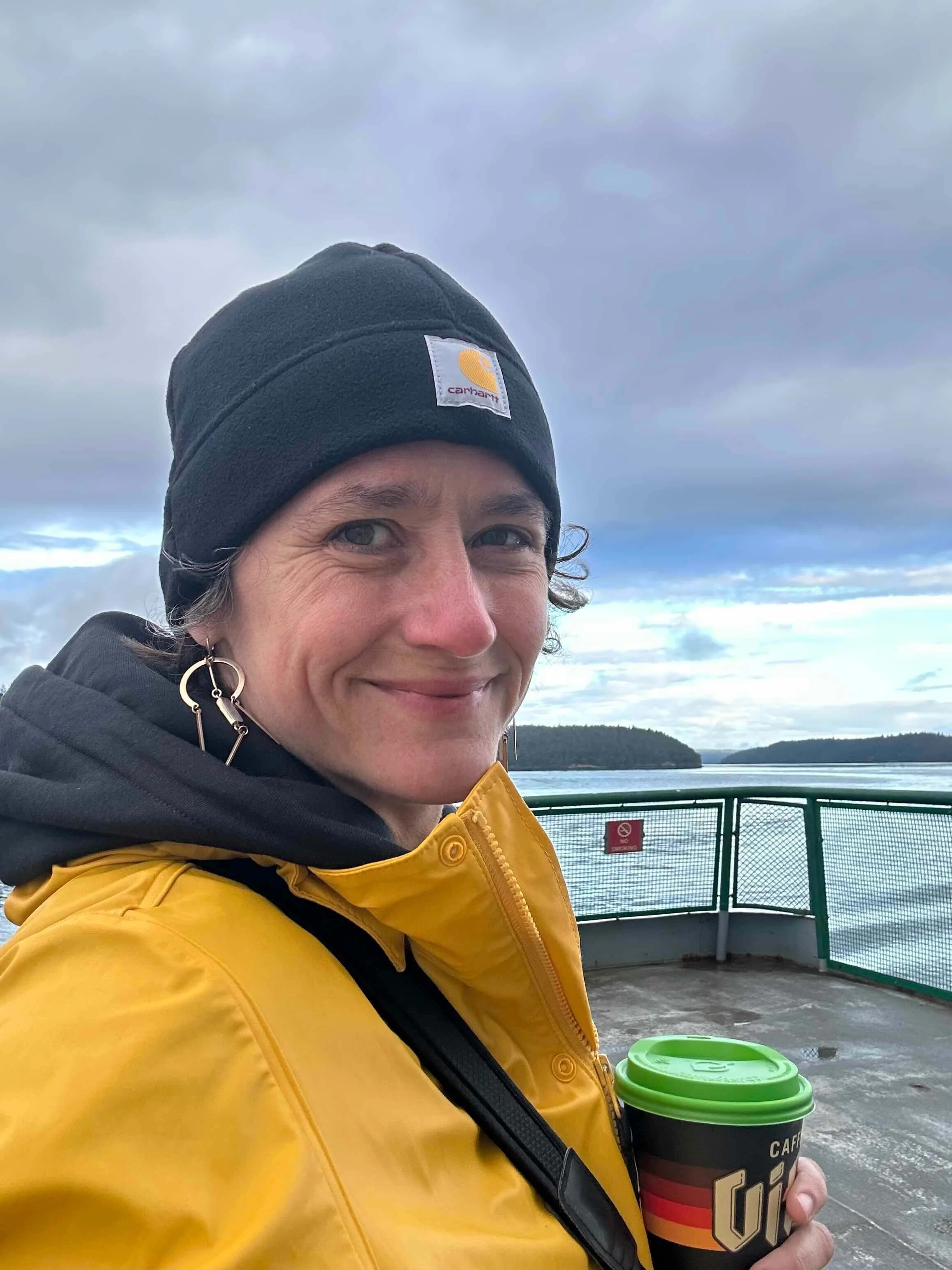
Aspen Leaves on Gray Terrain

I have enough years that mid-night obsessions
most often fix on the ways my body wastes away,

how at some point I will no longer lie in this bed,
but disintegrate like the leaves on the floor of a stand of aspen:

spilled coins, gold, silver, copper echoes
of a handful of pebbles in the well.

Remember how we quaked in unison,
scalloped hearts and stemmed handles?

How our roots shrugged snow from our spines
and shared the codes that let us survive

even as chlorophyll abandoned us,
as red left our foliage.

Do sleeping aspens dream
the same dream
the winter long?

The looming wave?
The unfamiliar neighborhood—

the one where
everything you
is not you.

Elaine Mintzer’s work has been published in Scientific American, Anacapa Review, MacQueen’s Quinterly, and One Art. She is the author of  two volumes of poetry: Natural Selections, (Bombshelter Press), and Drink from the River (Moon Tide Press) [available August 2026].  

Valentine’s Day

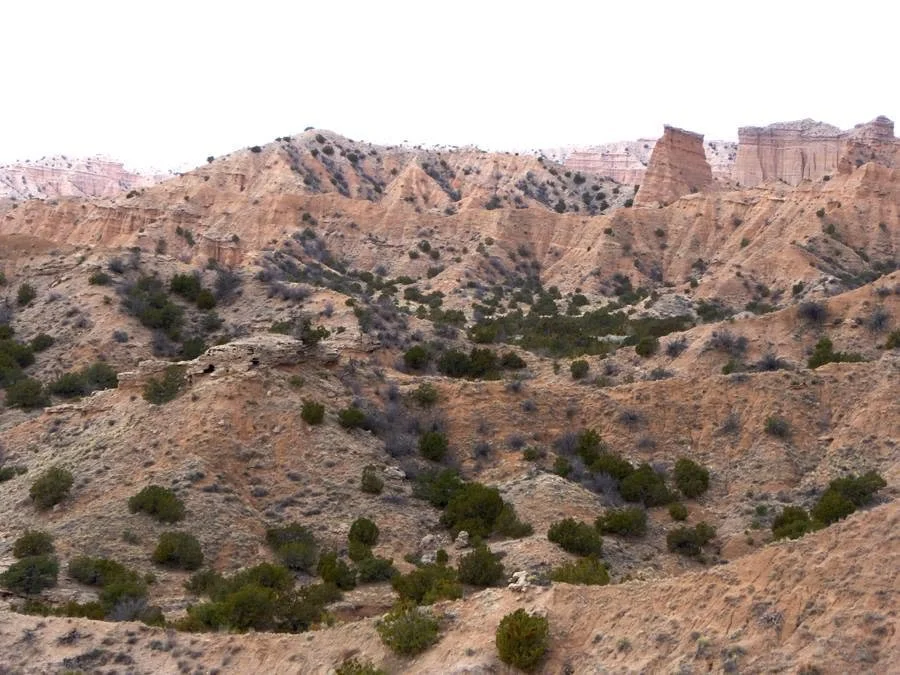
Bureau of Land Management, Chimayó Barrancas, Northern New Mexico

We always arrived, together and apart, with dogs, on foot or on horseback, never looking for answers.
We discovered the leaning fences that years ago held in the sheep, the dug out remnant of a
containment dam above the rheocrene spring, the pin-cushion cacti that bloom tiny pink among the
rocks and pebbles. Flowing no matter the time of year, from the first blue verbena, purple vetch, desert
lupine, and Indian paintbrush dappling the rocky edges of the spring, to the ice here in deepest winter,
thin veneer over the percolating sounds. Today I’m alone, our spring the destination on Valentine’s
Day, familiar turn-around for daily walks or runs, this morning’s version of something to rely on,
because the spring has not dried up once since my husband died. Always trickling or running, even this
snowless winter, enough to form clear ice, with tiny beads of air jostling in the shallow stream
underneath. The bubbles gather and disperse, hint and move – an ephemeral dance as the water flows.
When I close my eyes what appears behind them is the glint of air caught under ice.

cattails wind-clattered

winter red-wings on the stalks

through translucent ice

Michelle Holland, Poet-in-Residence for Santa Fe Girls School and treasurer of New Mexico Literary Arts (NMLA), lives on the Rincon de Los Trujillo, in Chimayó, New Mexico. Her poems can be found in literary journals, in print, online, and anthologized, most recently in Places on the Way: A Poetry Road Trip, June Road Press, and A Year of New Mexico Poetry, Casa Urraca Press. She has two book-length collections of poetry, Chaos Theory, Sin Fronteras Press, and The Sound a Raven Makes, Tres Chicas Press, New Mexico Book Award winner. Her latest collection, Circe at the Laundromat, is forthcoming November 2026, with Casa Urraca Press.

Banner image is courtesy the poet.
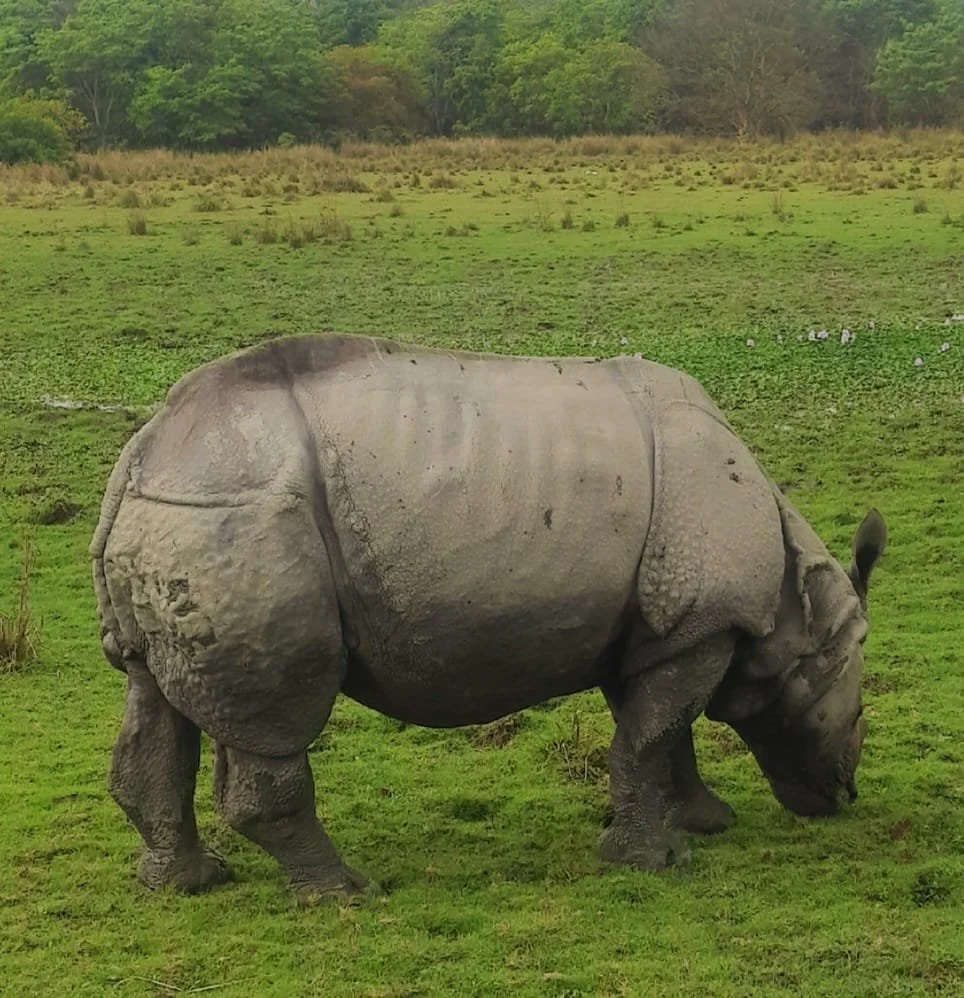
Listening to Spring in Pobitora

A moment of unearthly peace
When the perissodactyl ambles nearby. 

A sight from another era
When dinosaurs roamed free. 

Nibbling grass, swaying placid in the endless green
Clicking selfies in the background 

Wild elephant grass tall as sky
Our jeep a creature from machine era, grazing the dust of distance. 

A mother and child, nuzzle patient 
Rain a presence of yesterday 

Leaves glistening like pearls from spring
Flowers at a bride’s doorstep. 

The jeep rumbles once, grumbling into motion.
Mud tracks laid for the coming summer.  

Then will arrive torrential monsoon
When all things, even memories, will be underwater.

We pass by a distracted hog, two wild buffaloes
Another one horned rhino, in the fuzzy distance 

As our jeep ploughs on, a cuckoo’s cry piercing the air
The woods not yet lovely, dark and deep.

Elsewhere, time stands still as an elephant
Breathing slow and ponderous 

A giant from Cenozoic and Anthropocene
Watching the green whirr past.

Amlanjyoti Goswami’s new book of poetry, A Different Story, has just been published by Poetrywala. He has previously written two widely reviewed books, River Wedding and Vital Signs, published by Poetrywala. River Wedding was shortlisted for the Sahitya Akademi award.  A Different Story won the first runner up award at The Wise Owl Literary Awards 2026. Published in journals and anthologies across the world, including Poetry, The Poetry Review, Penguin Vintage, Rattle and Sahitya Akademi, he is also a Best of the Net and Pushcart nominee. His work has appeared on street walls of Christchurch, buses in Philadelphia, exhibitions in Johannesburg and an e-gallery in Brighton. He has reviewed poetry for The Hindu, Frontline, Review 31 and Modern Poetry in Translation among others. He translates poetry from Assamese, Bangla and Hindi into English and some of his poems have been translated from English into Hindi, Punjabi and German. He has read at various places, including Delhi, Mumbai, New York, Chandigarh, Boston and Bangalore. He grew up in Guwahati and lives in Delhi.

Banner image is courtesy the poet.
Hunting Agates in Oswald Park

Oswald West State Park, Oregon

Short Sands is a scrambled pitch
through understory, ankles wreathed in fern,
a shaky wooden bridge across
tangles of salal and sweet salmonberry.
We clamber over a fallen old growth cedar,
toppled across the path like a conquered giant.
The spill of rocks calls you, bent forward
in your endless quest for agates,
your Oklahoma twang over the ocean,
instructing me what to look for.
I watch waves, then finally bend
pluck up a translucent yellow rock
that reminds me of the wisdom tooth
found in the bathroom cabinet
after my husband left me. Like this?  
You laugh. I press it into your hand.
Ten years later, the day’s only agate
is somewhere in your home,
safe in a bowl of small stones.

Karen G. Berry is interested in micro-societies, the strange and secret lives of children, and the heroic nature of everyday living. Karen's work has been published by Thin Skin, Parks & Points,  Persimmon Tree, Open Secrets, Inknest, The Offing, Pasager, HerStry, Flash Fiction Magazine, Mackinaw, Defenestration Magazine, Rust & Moth, The Gilded Weathervane, Ekphrastic Review, and many other journals and anthologies, online and in print. She lives in Portland, Oregon. You can learn more about Karen at her blog, I am Not a Pie.

Banner image is courtesy the poet.
Byzantium in Jersey

That is no country for old men. The young
In one another's arms, birds in the trees,
—Those dying generations—at their song,
The salmon-falls, the mackerel-crowded seas,
Fish, flesh, or fowl, commend all summer long
Whatever is begotten, born, and dies.
Caught in that sensual music all neglect
Monuments of unageing intellect… (—W.B. Yeats)


This, my grandfather, in his Sunday best:
a cigarette dangling from its holder,
a tattered suit, a worn Italian vest,
with me at his side, decades less older.
He does not hold my hand. There is no rest.
He lectures as we walk, points my shoulders
to Monarch butterflies in flight toward me
along the shores of Budd Lake, New Jersey. 

This, a back country road, is my classroom:
milkweed, honeysuckle, red columbine,
hummingbirds, spotted touch-me-nots in bloom,
blue robins’ eggs, goldenrod, dandelions.
My grandfather names them for me, assumes
I will remember that sparrow, that vine,
the chicory, those edible lilies,
the mew of mimicking catbirds we see. 

All these now dead, except in memory.

I live in the suburbs, reminisce now
about ancestors. In autumn, I walk
the Hackensack riverbank in a drought.
I watch a murder of crows chase a hawk,
then pause to roost on sun-kissed golden boughs.
Beneath their echoing caws, I feel stalked.
This, I know, is my father’s father’s song
of what is past, or passing, or to come.

Bob Varettoni is a retired corporate communications executive who has lived all his life in New Jersey. He loves poetry, photography, and the Garden State.

Banner image is courtesy the poet.
Surfer Girl, After Fire

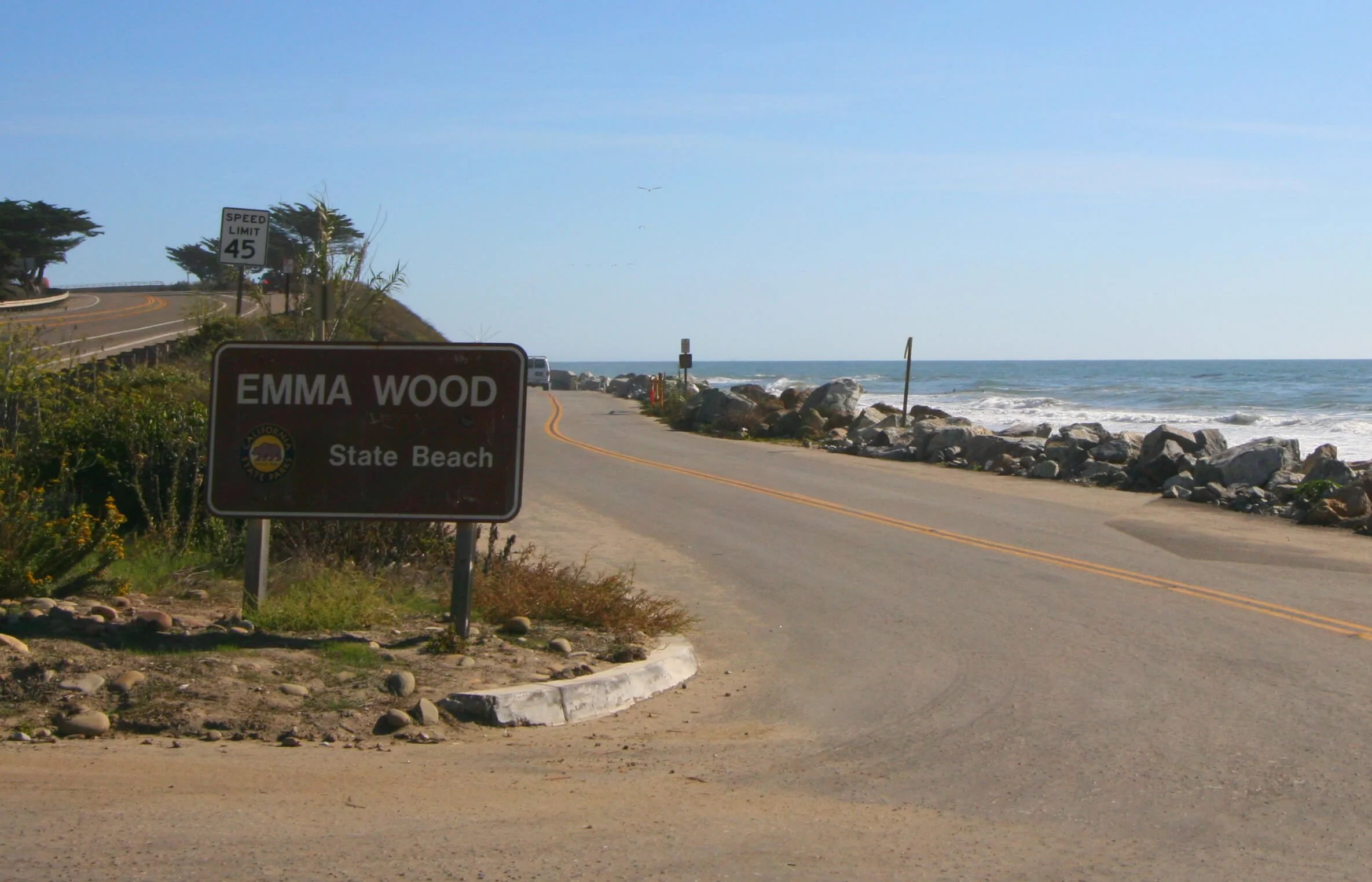
Inspired by Emma Wood Stage Beach in Ventura, CA

She leans her waxed blue board fin-side up against
boulders tumbled here ages ago, un-velcroes
the turtleneck rash guard on her wetsuit, shrugs
and wriggles shoulders free of her seal-skin,
and the half-birthed, straight-jacket struggle begins.  

Until—
frozen stopped. Chest rises. Falls. Breath out-of-rhythm.
She might gaze at sand flies
or piles of charred wood—but sees nothing.
She’s gone inside to reckon with the mind
or tell her drumbeat heart: slow down. 

This is no wildfire or late-night evacuation—

only a wetsuit, dripping. Bikini sea blue, blond hair a tangle.
The ocean beats the shore in steady rhythm.  

She breathes. Peels one arm free. Then the other.
Inside-out, person-less skin hangs
around her hips, conquered—its green lining bright
as spike moss growing through the burn scar.

Felice Alexandra is a poet-shaman, yogi, meditator and mother. She received her MFA in creative writing from Stonecoast MFA in Maine. She has performed her poetry all over the United States and Ireland. Her work has appeared in many fine journals. She is the recent winner of the Leon Priestnall Poetry Prize. She likes long walks on the beach and homemade rhubarb pie. Her first chapbook of poetry is forthcoming in 2026 on Channel Poetry Press.

Banner image courtesy DillyLynn - Own work, CC BY-SA 3.0, https://commons.wikimedia.org/w/index.php?curid=11917597

Panorama Point at Mt. Rainier First Hike Post-Neurosurgery

The couple of many birthdays
hikes on gravel and scree
between meadows of faded lupine
where borders of pink fireweed
and scores of feathery pasqueflowers
spread out in what’s left of summer.
They lean against the wall of rock
to let youthful hikers pass.
She checks her steps on steady rocks,
he avoids looking down
as they approach another switchback.
When they reach the vista,
he stops to peruse the receding glacier.
She snaps photos
before a cloud erases peak.

Expectant chipmunks scamper near
for mislaid nuts and raisins.
She spreads sunscreen on her cheeks,
the back of his neck, his ears
while they discuss the shorter
or the longer trail. They choose the extra mile.
He moves toward loose shale
and takes the dicey slope slow,
as she maneuvers without his past assistance.
He steadies himself with both hands
close to the steep slag and tuff.
A young man offers help,
to which the elder says, “Thanks, I’ll be okay.”
The younger stands aside but waits a moment
until the elder returns to ambling ease.
All hike on and some take photos of a marmot
as they lose the glacier in the shadow.
Her walking sticks mark time.
Once back on the paved many-peopled path,
the couple heads off to find their Subaru
somewhere in the overflow and picnic parking lot
that takes them extra walking time to find.
A bit stiff, they stop at the Ukrainian restaurant
in Ashford to celebrate her birthday,
text scenic photos to their son and daughter.

Mary Ellen Talley’s poems have appeared in many journals including Louisville Review, Deep Wild, and Trampoline as well as in multiple anthologies. Her chapbooks are: “Postcards from the Lilac City” from Finishing Line Press, “Taking Leave” from Kelsay Books, and “Infusion” online at Red Wolf Journal. She resides in Seattle, WA and worked for many years as a school-based speech/language pathologist (SLP.) Her website is www.maryellentalley.com.

Banner image is courtesy the poet.
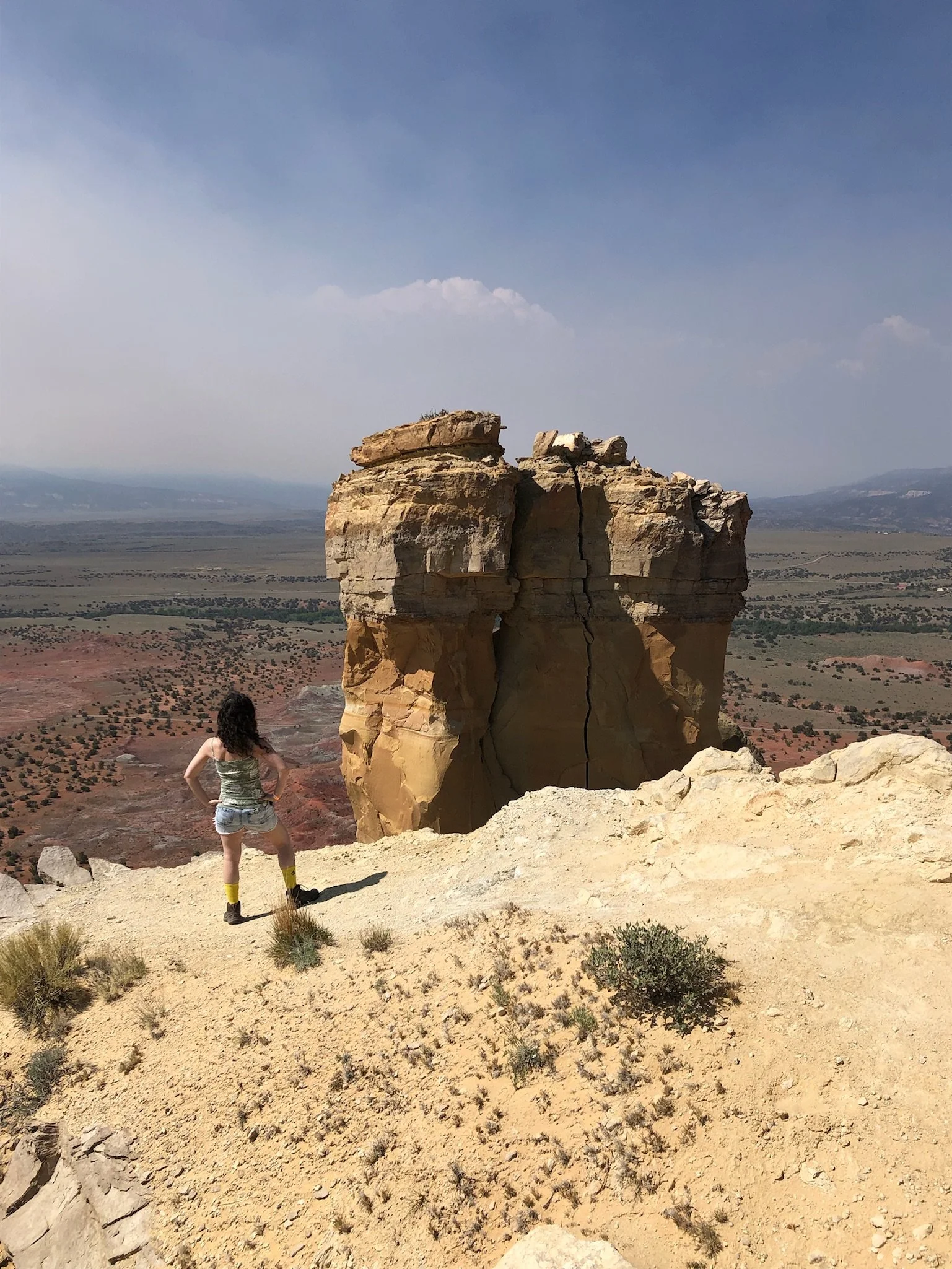
Chimney Rock

The burning to the east
has its own name. Once
at peak, smoke flows
for days and distance.
Not flood. Not drought.
Still, these all seem the same.
Out and back means climb
and fall. Clap for bobcats;
curl up for bears. Trail
curves sharp, inclines as
much, so that an end never
and always appears. A choice:
traverse rock, navigate cacti,
dirt now silk sand. Walls
cross canyon change red,
yellow, tan, sometimes
white, carved steps up
to tabletop. The flatness.
The peak levels off. The edge
arrives.


Christina M. Rau, The Yoga Poet, leads Meditate, Move, & Create™ workshops for various organizations worldwide. Her collections include Women In Space! and the Elgin Award-winning Liberating The Astronauts (Aqueduct Press). She moderates the Women’s Poetry Listserv and served as Poet in Residence for Oceanside Library (NY) 2020-5. Her poetry airs on Destinies radio show (WUSB) and appears in various literary journals like Carmina Magazine and Porcupine Literary while her prose has appeared in fillingStation and Reader’s Digest. During her downtime, she watches the Game Show Network.
 http://www.christinamrau.com / @christinamrau

Banner image is courtesy the poet.

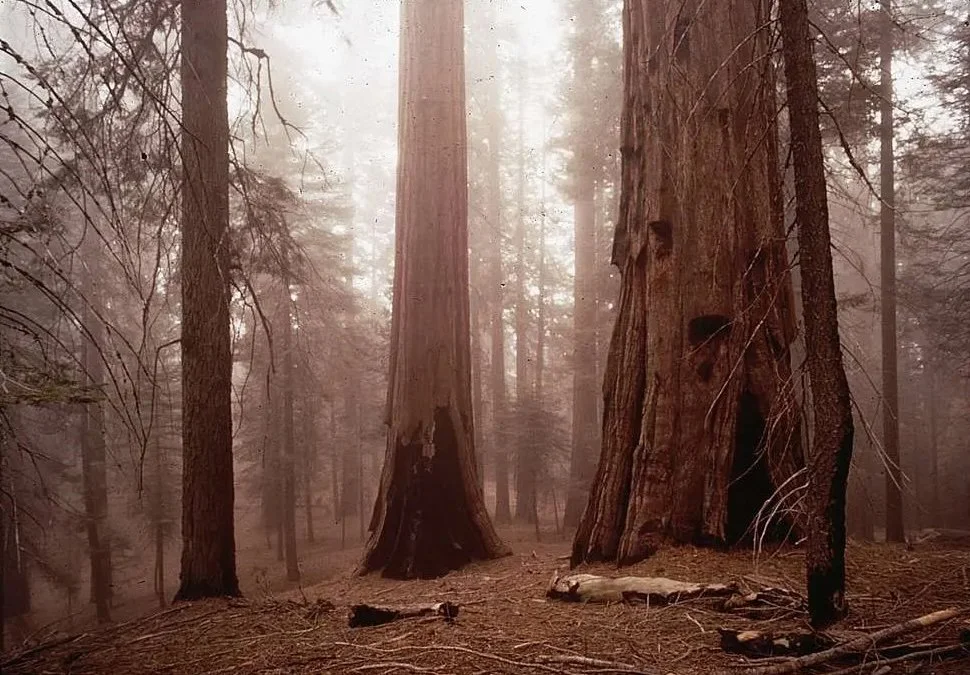
Big Basin State Park, Boulder Creek

ghost trees in a ground mist
no beginning for clarity,
no end to blurred vision,

lightning fire four years back,
earth stuck in bark-charred
terroir, no leaves to absorb sound

no branch-clack tells,
ash-step silences
this visitation

how to see when trees
are all shadow and yet
there is no light

even an old growth forest
can be humbled
brought down--already

sorrel peeks through ash,
bright green epiphytes twine
on blistered limbs

Jeff Burt lives in Santa Cruz County, California. He has previously contributed to Sheila-Na-Gig, Heartwood, Williwaw Journal, and others. He has a book, The Root Endures, out from Sheila-Na-Gig in January, 2026. More can be found at http://www.jeff-burt.com 

Banner image courtesy National Archives.

Kayak Accident

(On the Huron River near Hudson Mills Metropark, Dexter, Michigan)

Hanging there like a chimp from a branch—
kayak stolen in a swift current—
suspended in rushing water, unsure of depth,
with no sturdy foothold,
I have a slender, creeping awareness
of gratitude for my lifejacket,
then for my surprised friends who
grab the water-logged boat, struggle
to dump it out, and rescue me.
After donning dry clothes,
I get back on that wet horse. Cold. Arms aching,
shaken by what might have been,
confidence as swamped as my kayak,
and I find myself compelled to count
all the turtles presenting themselves. Solid. Real.
Adorable little ones beside shining dinner plates.
Families. Whole communities along the shore,
or lounging on logs in the sun
skittering in as we pass, plop, plop, plop,
or staying put, steadfastly languorous
on one of the last warm days of fall.
Moving rapidly along, my closest companion
grows impatient with my counting: 89, 90, 91…
I’ll stop when I get to 100, I promise.
But I can’t. Arithmetic is tranquilizing.
Each one a breath, a breath, a breath.

Katherine has two books of poetry: Keeping Out the Noise, (Kelsay Books) and The Grain Beneath the Gloss, (Finishing Line Press,) plus two chapbooks. Her newest book, All Skulls Smile Alike, will be published this year. Her work has appeared in Coe Review, Birmingham Poetry Review, Light, Hanging Loose Press, Orchards Poetry Journal, The Brussels Review, Third Wednesday, and Four Tulips, among others. She headed up a department at University Health Service, and served as a Project Manager through the University of Michigan, and as an Ann Arbor City Council member. She is a retired social worker and a grandmother of four.

Banner image is courtesy the poet.
Micropoems

Photo by David Newcomer lV

HAIKU 3

hiking poles at rest 
a thousand suns —
in the wet grass 

Annie Klier Newcomer is a Shawnee Mission, Kansas poet and author of Comets—Relationships that Wander. Inspired by a Key West Literary Festival challenge from Jamaican National Poet Laureate Kwame Dawes, she has written over 500 consecutive daily haiku. This fall, her poem about her blue-eyed Aussiedoodle, Summit, appears in the Kansas City Review, and her two Ten Minute plays debut in Columbia, Missouri’s Starting Gate New Play Festival produced by Talking Horse Productions.


Circles

far from a birch bowl
that cradles flightless feathers
winged knives cut the night
and talons honed on hunger
tear a thread of life from death

~Grand Tetons National Park, Wyoming


Elizabeth Spencer Spragins has written for more than 100 journals and anthologies in 12 countries. She is the author of three original poetry collections: “Waltzing with Water” and “With No Bridle for the Breeze” (Shanti Arts Publishing) and “The Language of Bones” (Kelsay Books). elizabethspencerspragins.wordpress.com.


Diana’s Baths, White Mountain National Forest

Snow-melt from Big Attitash thunders past,
halts my breath until I find balance,
barefoot on the stone. Cold singing in my bones,
feet a perfect shade of pink, I stand on pebbles
in the shallows, sheets of water tumbling
boulder after dimpled boulder, each small pool
                 pillowing into another.
Farther downstream there may be more
waterfalls, more pools,
   but it’s enough to discover a private patch –
families and couples pursuing a perfect photo
pose and a signal that works in this notch
    between mountains. People’s calls and shouts recede,
        louder now the crows arguing in maples.
    Here, a lady-slipper
       hides beneath hay-scented ferns, and here
a fledging finch explores the edge of its nest.
    Cedars scent the shadows in a forest greenly silent
as Lucy Brook rushes around me –
      through me.

KB Ballentine’s seventh collection, Edge of the Echo, is scheduled to launch May of 2021 with Iris Press. Her earlier books can be found with Blue Light Press, Middle Creek Publishing, and Celtic Cat Publishing. Published in Crab Orchard Review and Haight-Ashbury Literary Journal, among others, her work also appears in anthologies including In Plein Air (2017) and Carrying the Branch: Poets in Search of Peace (2017). Learn more at www.kbballentine.com.

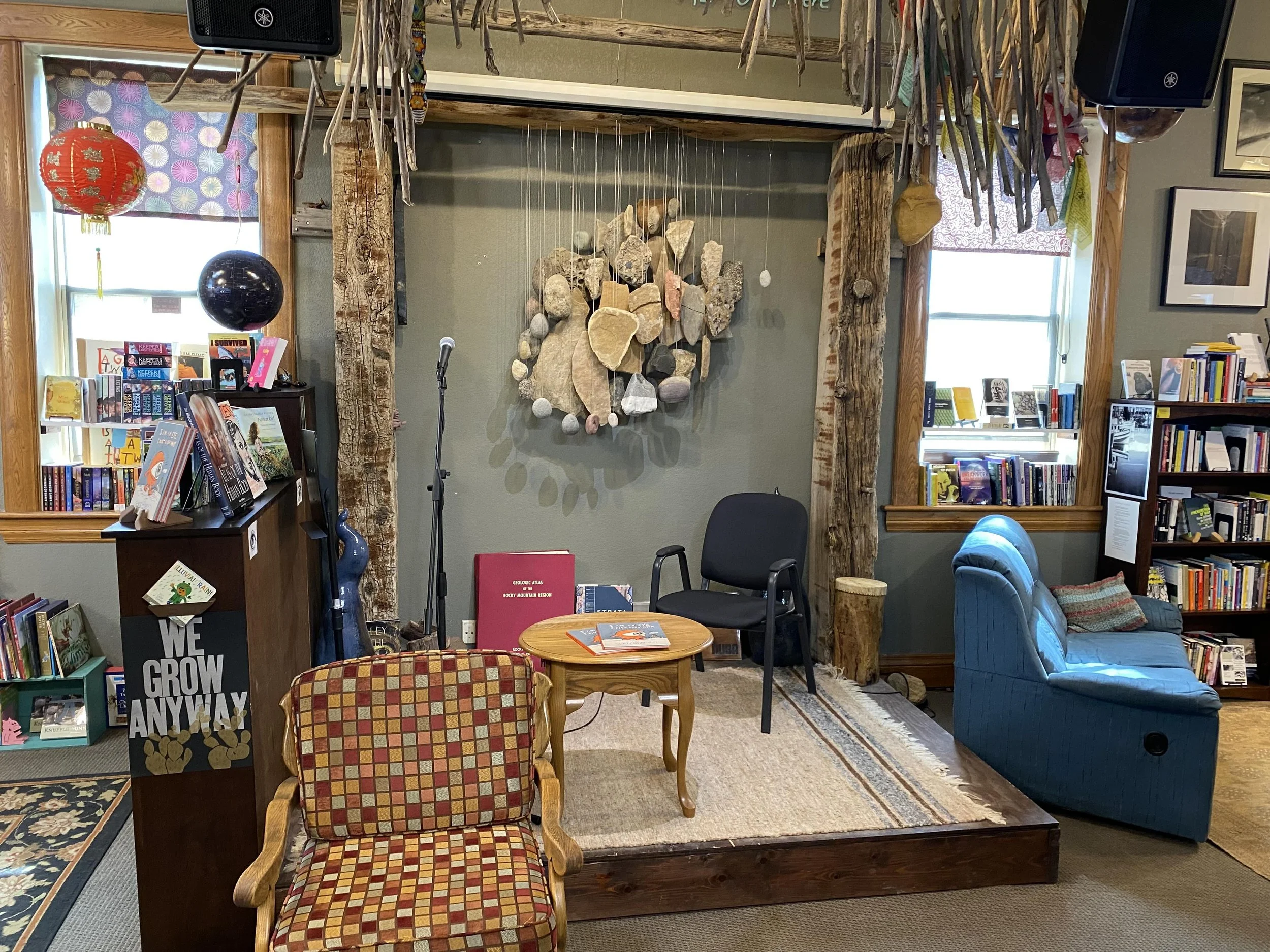
View of the Colorado Monument from the Lithic Bookstore

You should consume the world in small bites –
the rock in front of you rather than the whole mountain
to better appreciate fine points like the view
of the Monument through the window of Lithic
to the right of the Beaver Stick Stage diffused,
scattered, pixilated by the thin shade. Danny Rosen regales
with layers of wisdom beside strata of red and brown
and cream. The train on nearby tracks clacks out the meter,
a metronome snapping its fingers at lines that resonate,
while the whistle cries for joy as the poet coaxes
the setting sun from under clouds to slither golden
up western facing rocks and shadows hide
like moonflowers folded against the light.
This is the place for glimpses – of insight,
of the poet vulnerable, unknowing,
before the Monument peering back at us,
giving us a limited, curated view surrounded
by a frame of poetry. Polite applause
is irrelevant.

Lisa Wence Connors retired from the US Army and is now a mercenary writer and poet. She facilitates creative writing workshops for the Mesa County Public Library and the Grand Junction VA. She is the Editor of High Desert Cadence: A Journal of Veteran Creative Writing. Her work has been published in the journals Proud to Be, Alexandria Quarterly, Gyroscope Review, among others, as well as several anthologies.  She has won two Missouri Humanities Poetry Awards and four Gold Medals for Poetry from the National Veterans Creative Arts Festival.
Banner photo by Kyle Harvey

Roots

When we return, a year older, hair grayer, skin thinner

the rocks remain as they were, as they are,
aging imperceptibly. Likewise the pine trees,
the grass, the dandelions and the assorted creeping weeds
assert their presence as if they owned the earth they live on.
They do. Communities of cotton clouds populate the landscape of
a pale blue Maine sky. The lake below. The early morning fog. The sun.
The intermittent showers. The thrilling thunderstorms.

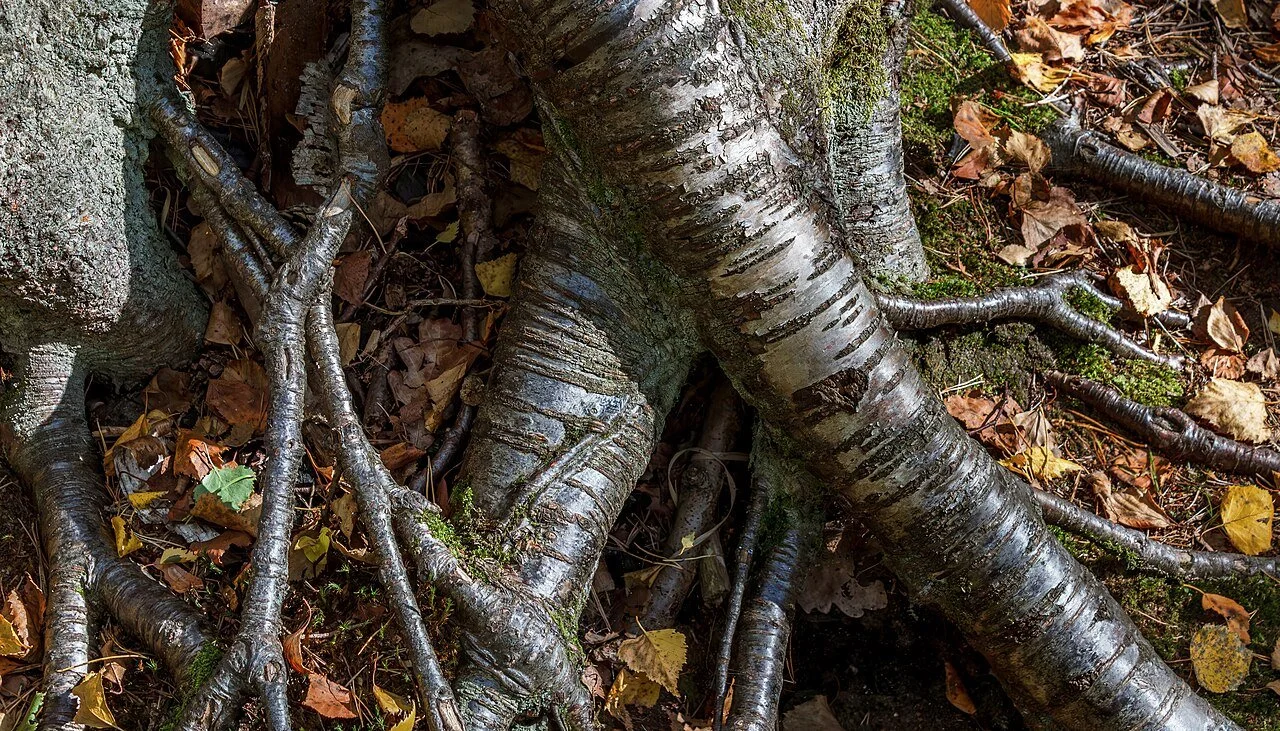
Ageless. That birch tree. Year after year its roots angle themselves
above the mud, a sturdy stool, three-legged guardian of water’s edge.
Now a single loon glides by, elegant in black and white. A queue
of ducklings, preschoolers on a wet field trip, paddles its way
to somewhere, chaperones behind and aft. Above, the raucous braying

of a fraternity of crows. All as it should be.
Another birthday. Would these ancient eyes still recognize
the Bronx-born street-smart lemme-outa-here five year old
escaping home for kindergarten, that brick jailhouse of possibility?
“Don’t get ‘cited, lady I’ll find it myself,” she shouted, bolting
from the crowd of children gripping their anxious moms, bounding
up the steel staircase. School! At last!

And here I am. Old.
Over-educated. Far and so thankful to have exited the housing project life,
the steam pipe secrets, the gangs, the subway lullabies, the drug deals,
the petty rules - no pets, no stepping on the grass - here I am,
neighbor of trees and turkeys, raccoons and rabbits. Nevertheless,
am I not that kindergartener? Is that lake not that lake still?

“Don’t get ‘cited, lady, I’ll find it myself.” I turn 80. 81. 84; 85....
The rocks remain, aging imperceptibly. The birches, the loons…
My children, their children’s someday grandchildren….Little future girl,
here by the changeless lake, I bequeath you that kindergarten spirit.
This forever home. This lake. This moon.

This rock. This tree. This crow.

Marian Kaplun Shapiro, a past contributor, is now 87 years old, and a practicing psychologist in Lexington, Mass. (USA). She is the author of a professional book, and five books of poetry. A five-time Senior Poet Laureate of Massachusetts, she has been twice nominated for the Pushcart Prize. Upbringing, her latest collection of graphic poems, was published by Plain View in January, 2023.

A version of this poem was published with Waxing and Waning, in 2022.

Banner photo by W.carter own work, Creative Commons Attribution 4.0 International license.

Being Green

. . . annihilating all that’s made
to a green thought in a green shade.
Marvell, “The Garden”

The starlings’ viridescence;
algae glow, mossy rock,
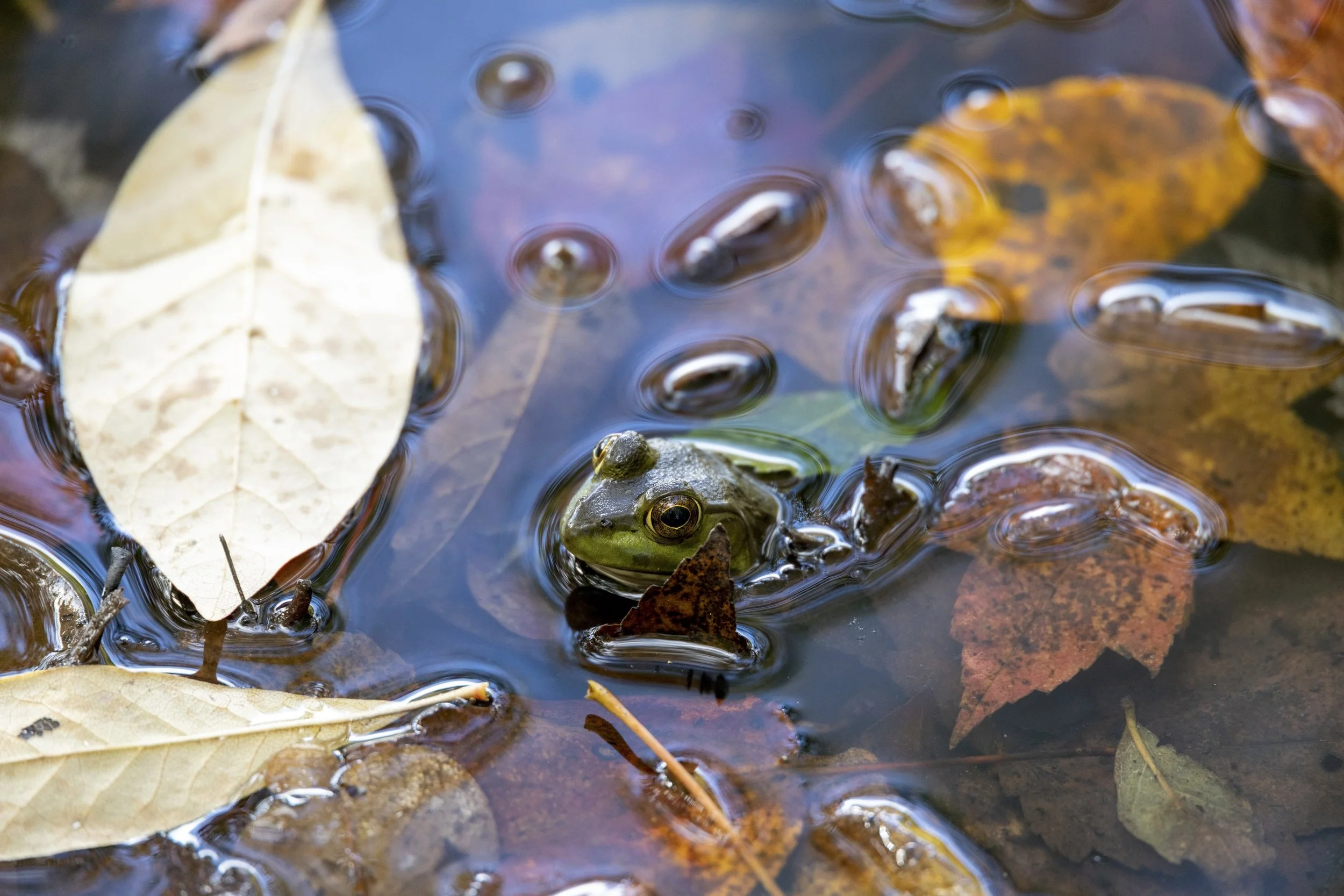
half a dappled frog;
the mallard’s brushed velvet
sheening as he glides,
his trailing wake smoother
than cool viridian glass;
willow leaves sleek as
a school of green minnows
darting this way, then that.

Fernwood Botanical Garden and Nature Preserve, Michigan

Growing up on the western bank of the St Joseph River John Savoie has swum, canoed, and kayaked to Fernwood countless times. Once he even drove. His poems have appeared in Poetry, Rattle, and Poetry in Motion,  and his first collection Sehnsucht won the Prize Americana.

Banner image courtesy Parks & Points.