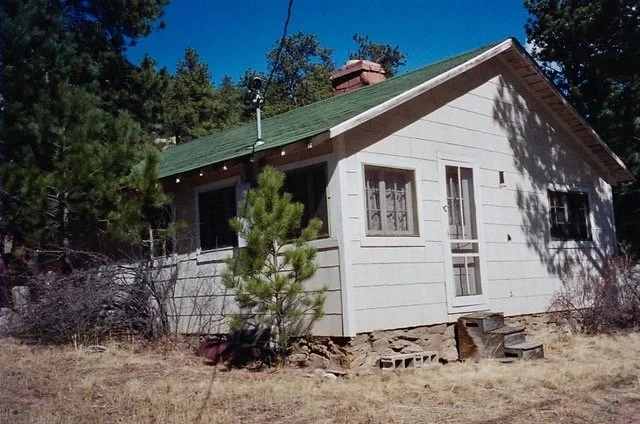
The Cabin

A story poem set in The Big Thompson Canyon, on the way to Estes Park, Colorado and Rocky Mountain National Park

Dad slams the trunk of the car – he’ll be waiting.
A last look – bed made; diary hidden under
pillow. Heat, humidity at dawn – Iowa in August.
Tonight, mountain views. Full of hope, I dash
downstairs. Wish my dad and sister could have fun. 

He grips the wheel of the ’51 Dodge, a straw fedora
shields his eyes crossing Nebraska, headed west.
Mother, spiffy in seersucker skirt and crisp sleeveless
blouse, salt and pepper curls, a recent cut. She’s jolly,
loves a trip. No idle talking. “You know it makes
your father nervous.” 

Backseat a scratchy bench, an invisible line separates us
sisters. Seven years between us, she an angry teen and me,
a car sick kid. I want to lie down. Impossible. Homemade
cookies in a tin, a thermos of icy water at our feet, a wet
washcloth on my neck. Doors locked, windows down,
we sweat. 

Tracking our progress on a map, I’m first to glimpse
the mountains far ahead. Sharp curves, the highway
curls through Big Thompson Canyon, cut by river’s
rapids. Scanning rock walls, I know where to look.
There she is – the cabin squatting high in the rocks,
hiding among the pines. 

The Big Chief Motel, its neon feather headdress lit day 
and night, too pricy for Dad’s pay. My sister groans,
her disappointment hangs in the air as we pass it by.
Parked alongside our clapboard cabin, Mother scolds,
“No pouting, you’re a lucky girl.”  

Heat from Nebraska crossing melts into shadowy, cool
Colorado. I collect prickly pinecones big as popcorn balls,
wild columbines, buttercups, a perfect centerpiece bouquet.
Rocks sparkle with mica, rose quartz, souvenirs fill my pockets.
I’m fluttery at this altitude, intoxicated. Iowa, so very far away. 

Dad sets up the Coleman stove. Mother boils water safe
to drink. Bedroom, shared, same as last year. Scent 
of mothballs, the quilt’s red yarn knots will tickle our chins.
I promise to lie still. Iron bedframe, squeaky springs,
slop pot in the corner. An owl hoots as dusk dims to night. 

Last trip to the latrine. A steep path, moonlight paints the way.
“No bears,” Mother reassures. “Your dad shouldn’t tease.”

Janet Banks is a Boston-based writer with roots in Iowa where she was born and raised, and New York City where she lived and worked for thirty years. Essays, stories and poems have appeared in The Harvard Business Review, Parks & Points, Bluestem Magazine, Cognoscenti, Poetry and Places, The Rumpus, Entropy Magazine, Silver Birch Press, Persimmon Tree, Lucky Jefferson, Bryant Literary Review, Backchannel Journal and elsewhere. Her poetry collection, Enough Time was published in 2024, in celebration of her 80th birthday. https://store.bookbaby.com/book/enough-time

Banner image is courtesy the poet.
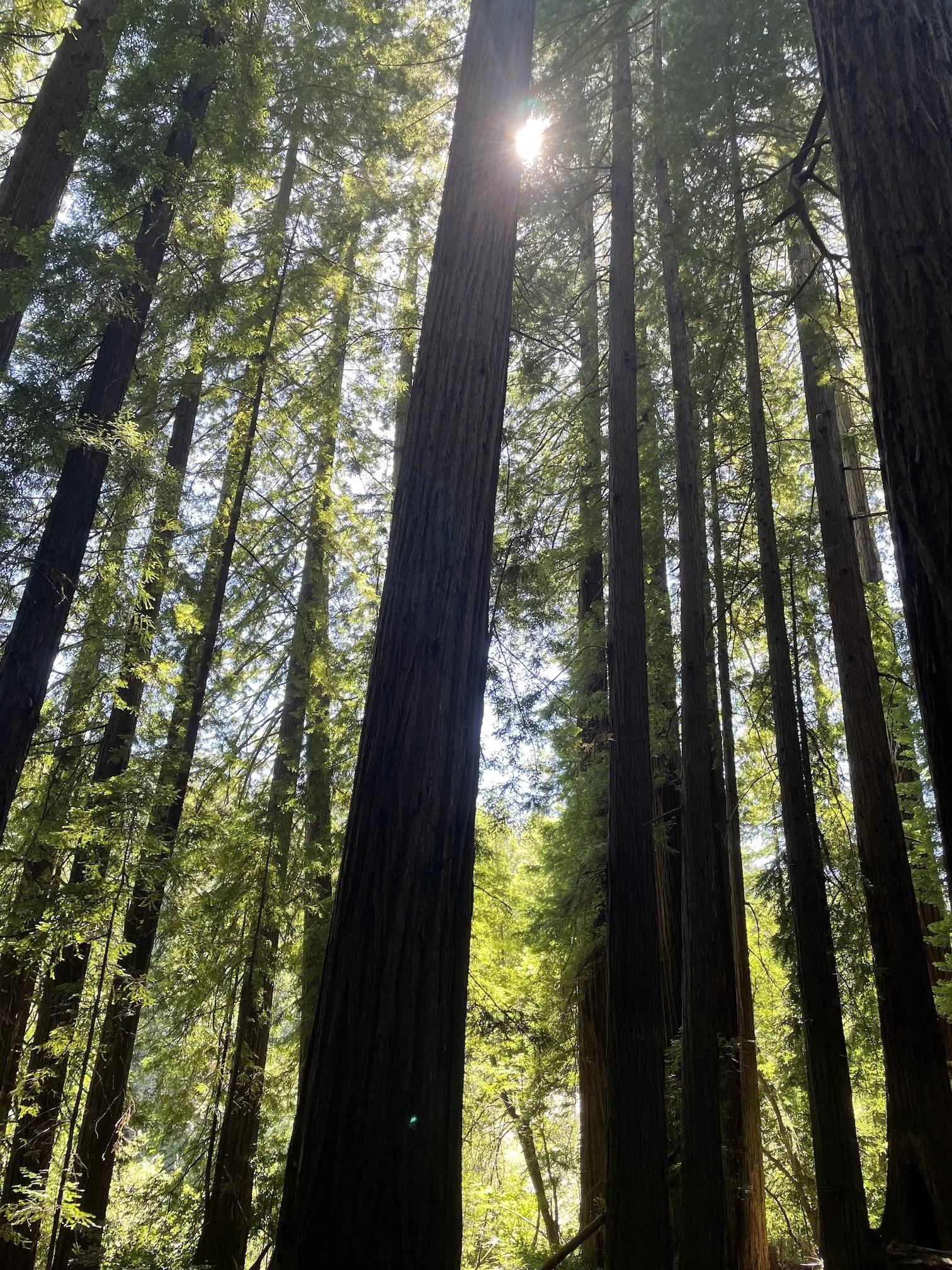
In the Grove of Titans

Inspired by a recent visit to Jedediah Smith Redwoods State Park

The ranger greets us at the trailhead—
dusky-green park uniform, flat-brimmed hat,
piercing through her nose. We are her summer job.
She’s still learning as she pokes
the understory with a stick, finding a fairy-bell flower
hidden under the umbrella of redwood sorrel.

We touch the soft spores lining sword ferns
before they release themselves to wind. She looks for
yellow-spotted banana slugs, tells us they scour
the forest floor, eat anything except the trees.

But who comes to the Grove of Titans to look down?
We raise our eyes as far as they reach to see how
inch-by-inch and ring-by-ring, these trees have risen
into a canopy of giants nudging clouds.

Saplings root in the decay of the fallen;
blueberries sprout in the soft rot.
Everything with purpose, she says—
the uprooted most of all.

For this one day of our lives, we stand
under centuries of growth, shafts of light guiding
us on the trail as the ranger loops us back
to where we started.

Redwoods still growing—
little bits of forest stuck on our shoes.

Connie Soper is an Oregonian who finds inspiration in visiting small towns or while hiking or beachcombing. Publications include Catamaran, Canary, Cider Press Review, ONE ART, Sky Island Journal, and elsewhere. Her first full-length of poetry, A Story Interrupted, published by Airlie Press in 2022, celebrates walking and witnessing her native terrain.  She shares her time between Portland and Manzanita, Oregon.  

Banner image is courtesy the poet.
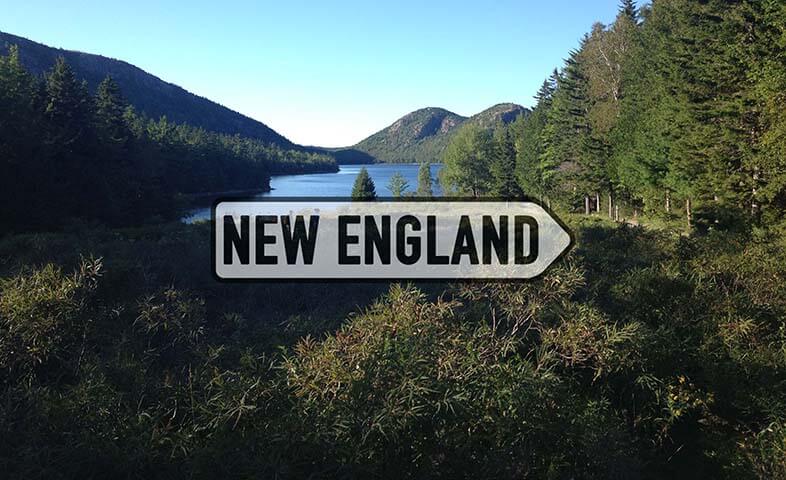
In Geologic Time

Bridger-Teton National Forest

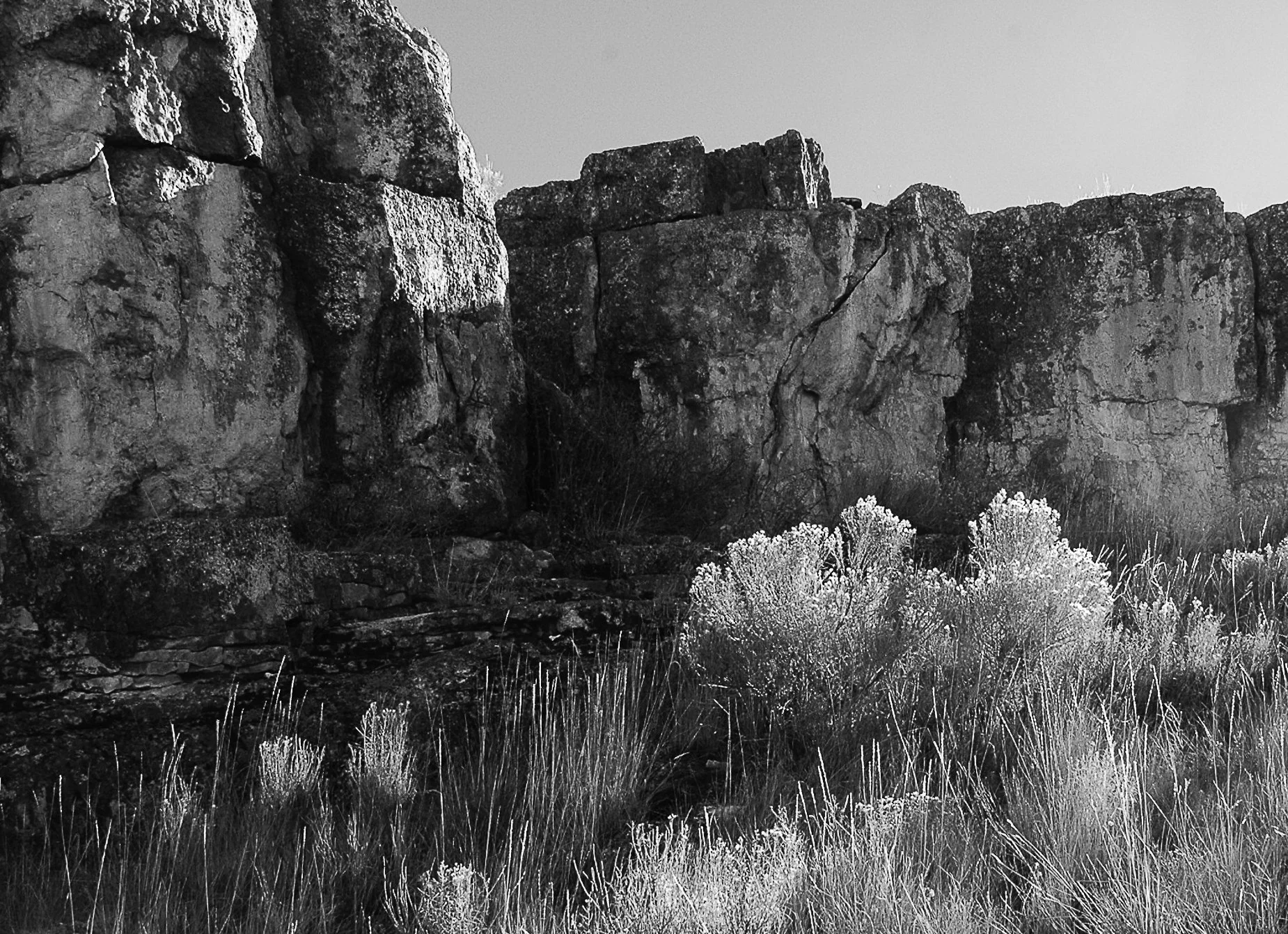
I press my palm to limestone’s rugged face,
a cliff band, former seabed, born half a billion
years before I stand beside it. Geologic time:
intangible as an abstract painting that suggests
a harbor scene, or possibly a teapot.

Two miles high, this stone remembers ocean.
How must it feel, after eons of burial,
to emerge transformed into a world
of dazzling sunlight, snow squalls,
mountain summit winds?

Half a billion: eight zeros skip like stones
along the surface of my mind. How to picture
a time when Earth was wrapped in methane,
plants not yet invented? Yet, what is more manifest
than a wall of rock on an indelible afternoon?

Limestone speaks of the eternal, time replaced,
perhaps erased, solace in this age of climate havoc,
mass extinction, war.

The wild is more than land away from roads.
It lives in limestone, primordial ooze and
crumbling cliff, in spreading crustose lichens,
in alpine bouquets of cinquefoil and sky pilot
waving pungent greetings into the eternal now.

Susan Marsh uses her background in the arts and natural history to create a body of work that explores the relationship of humans to the wild. Her poems have appeared in Clerestory, Manzanita Review, Deep Wild Journal, Dark Matter, Parks and Points, Silver Birch and other journals and anthologies. She has published two chapbooks, This Earth Has Been Too Generous (2022), and Passings, (2025).

Banner image is courtesy the poet.